Why Dynamic Pricing Is Becoming Essential for Accommodation Providers
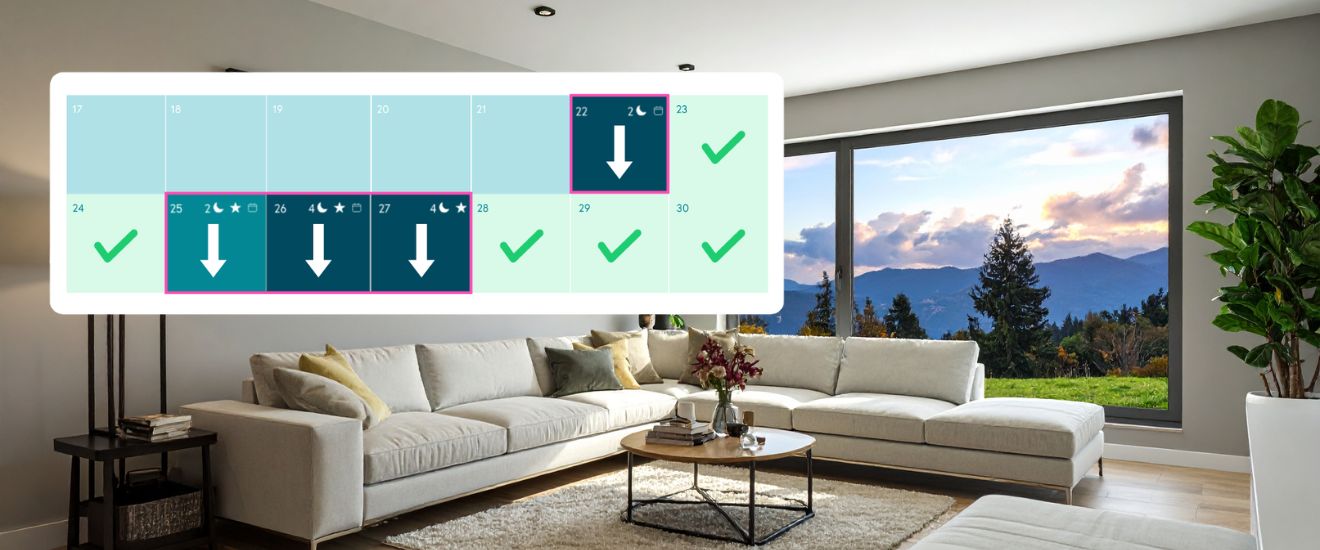
Renting out tourist accommodations today is no longer the same as it was ten or fifteen years ago. Guests now have an enormous number of options, and prices on booking platforms can change almost daily. Because of this, price management has become one of the key factors for running a successful accommodation business.
Many accommodation providers do adjust their prices, but often without a clear overview of the market situation. Prices are increased or decreased mostly based on intuition — depending on current occupancy, upcoming dates, or a feeling that the price might be too high or too low. However, it can be difficult to know what prices similar accommodations in the destination are offering, what the actual demand looks like, and whether a different pricing strategy could generate more bookings or higher revenue.
This is why data-driven pricing is becoming increasingly important. Dynamic pricing allows accommodation rates to adapt to real market conditions and demand. Today, these solutions are also accessible to smaller accommodation providers, especially if they use a channel manager such as Bentral, which can be connected to the Beyond pricing system.
What Is Dynamic Pricing?
Dynamic pricing means that the price of an accommodation adjusts according to market conditions. In other words, the price is not fixed but changes based on several factors. The most important ones include:
- demand in the destination
- seasonality
- local events
- accommodation occupancy
- competitor pricing
⠀This pricing strategy has long been standard practice in the hotel and airline industries. Increasingly, it is also being adopted by providers of apartments, rooms, and holiday homes. For example, when demand is high during a certain period, prices can increase accordingly. On the other hand, if many dates remain available shortly before arrival, lowering the price slightly may increase the chances of securing a booking.
Why Monitoring and Adjusting Prices Matters
One of the common challenges in accommodation management is that prices often remain the same throughout the entire season without adapting to market conditions. The tourism market is highly dynamic. Competitor prices change daily, and guest demand fluctuates constantly. If you do not adjust your prices accordingly, two things can easily happen:
- your price may be too high, causing you to lose potential bookings
- or too low, meaning you are leaving money on the table
⠀Effective price management can significantly impact your overall revenue. In practice, this means generating more bookings during periods of lower demand while maximizing revenue during times of high occupancy. However, manually tracking all these factors can be time-consuming and complicated. That is why specialized dynamic pricing systems play an increasingly important role. These tools automatically analyze market conditions and recommend optimal pricing.
What Is Beyond Pricing
Beyond Pricing (often simply called Beyond) is a software solution for dynamic pricing of short-term rental accommodations. It is designed for apartment owners, vacation home hosts, room rentals, as well as property managers who manage multiple listings.
What Does Beyond Do?
Beyond automatically adjusts nightly rates based on real market conditions. To calculate optimal prices, the system analyzes more than one billion data points every day.
It takes into account various factors that influence demand in your destination, such as seasonality, day of the week, and current market demand. Based on this data, Beyond calculates the optimal price for every date in your calendar on a daily basis.
The goal is to achieve the best balance between:
- high occupancy
- maximum revenue
All recommended rates are based on the Base Price that you set for your listing in Beyond.
How Does the System Determine the Starting Price?
Beyond uses the average base price of your accommodation as the starting point. For example: If your average nightly rate during high season is €300, and during low season €100, the base price would be approximately €200. Using this base price as a reference, the system then calculates recommended rates for each specific date.
When doing so, Beyond considers several important factors, including:
- seasonality
- day of the week
- booking lead time
- holidays and vacation periods
- major events in the area
This allows Beyond to adjust prices daily based on actual market demand, helping you reach the optimal balance between occupancy and revenue.
You Always Stay in Control
Ultimately, you as the property owner or manager always have the final say over your pricing. In Beyond, you can set minimum and maximum price limits, within which the system dynamically adjusts your rates. If needed, you can also manually override the system’s recommendations at any time.
Integration Between Bentral and Beyond
If you are using the Bentral channel manager, Beyond can be easily connected to your system. Once the integration is activated, Beyond automatically sends recommended prices to Bentral. Bentral then updates these prices across all sales channels such as Booking.com, Airbnb, and other booking platforms.
This means your prices are always up to date across all channels without manual adjustments. This integration offers several important benefits:
- time savings
- more optimized pricing
- improved market competitiveness
- increased revenue
How Much Does Beyond Cost?
Beyond usually operates on a commission-based pricing model tied to the revenue generated. The cost is typically around 1% of the booking revenue managed by the system. This means there is no large upfront investment — the service is paid based on actual performance. For larger property managers or agencies, customized pricing packages are also available.
Benefits of Using a Dynamic Pricing System
Using a system like Beyond brings several key advantages for accommodation providers.
Higher Revenue
Because the system adjusts prices based on demand, you can increase rates during periods of high occupancy and maximize revenue.
Better Occupancy
When demand is lower, the system recommends lower prices, helping fill otherwise empty dates.
Less Manual Work
Monitoring competitors and updating prices daily can be time-consuming. Beyond automates most of this process.
Stronger Market Competitiveness
Because the system continuously monitors the market and competitors, your prices are always aligned with real market conditions.
Smarter Decision-Making
The system relies on data and market analysis, rather than intuition or guesswork.
Conclusion
The tourism market is becoming increasingly competitive. Guests compare many options and quickly choose the one that offers the best balance between price and quality.
This is why active price management is now one of the key factors for success in the accommodation business.
With the integration between Bentral and Beyond, accommodation providers can easily implement an advanced dynamic pricing strategy, save time, and increase their revenue. Dynamic pricing is no longer a tool used only by large hotels — it is rapidly becoming the standard for apartments, holiday homes, and other tourist accommodations as well.